![Logo_Wiserfunding Logo -01-2.png]](https://knowledge.wiserfunding.com/hs-fs/hubfs/Logo_Wiserfunding%20Logo%20-01-2.png?height=50&name=Logo_Wiserfunding%20Logo%20-01-2.png)
ESG stands for Environmental, Social and Governance. It is a framework used by investors, lenders, regulators and businesses to assess how organisations manage sustainability-related risks and opportunities.
The Environmental pillar focuses on topics such as greenhouse gas emissions, climate impact, energy use and resource efficiency. Wiserfunding's Carbon Metrics are designed to help users understand a company's environmental footprint, particularly its greenhouse gas emissions.
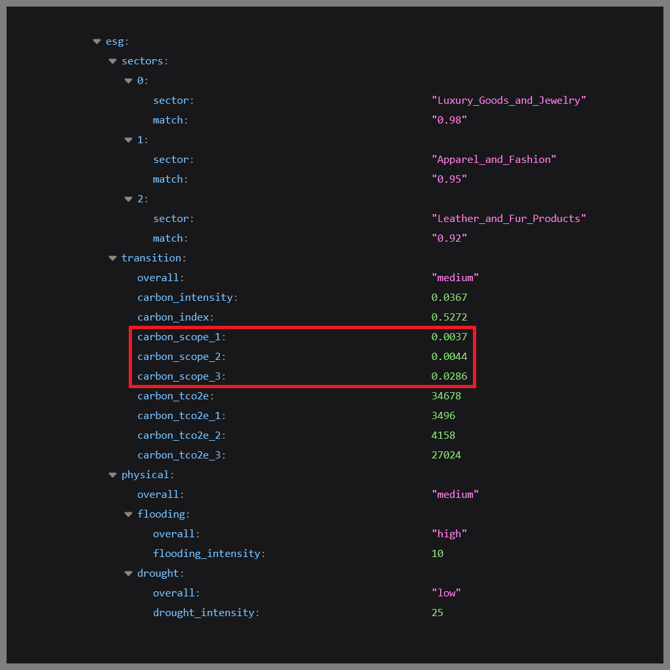
To help organisations measure and report emissions consistently, the Greenhouse Gas Protocol groups emissions into three categories: Scope 1, Scope 2 and Scope 3.
Scope 1 – Direct emissions
Emissions generated directly by a company's own operations.
Examples include:
- Fuel burned in company vehicles
- Manufacturing processes
- On-site heating systems
Scope 2 – Purchased energy emissions
Emissions associated with the electricity, heating or cooling a company purchases and consumes.
Although these emissions occur elsewhere, they are attributed to the company because they result from its energy demand.
Scope 3 – Other indirect emissions
Emissions that occur elsewhere in the value chain.
Examples include:
- Business travel
- Employee commuting
- Operational waste
You may also find our other articles on Carbon Intensity, Index, and Emissions Scopes useful:
If you have any further questions or face any issues, please contact our support team.